Finding Flow
The mindset and rhythm of vibe coding—learn when to think fast, when to think slow, and how to build a sustainable creative partnership with AI.
Finding Flow
The secret to vibe coding isn't the tools—it's the mindset.
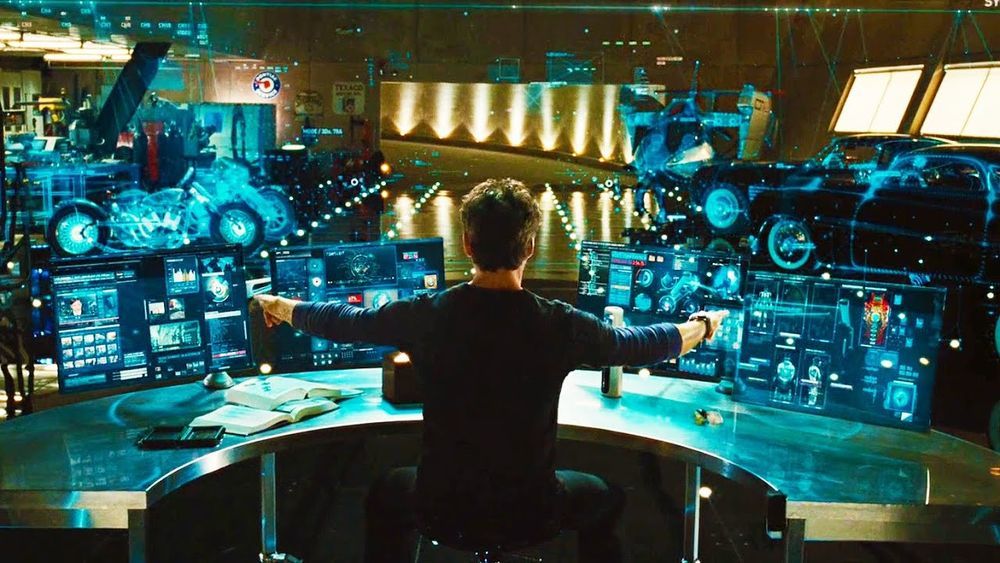
Look at that image. Tony Stark isn't typing furiously or debugging line by line. He's conducting. He's the creative director with a vision, and JARVIS—his AI—is the capable partner that makes it real. That's what vibe coding feels like when you find your flow.
The Core Truth
AI models are remarkably good, and they're getting better every month. But here's what most people miss: the technology isn't the bottleneck—you are.
Not because you lack skill. Because you haven't learned the rhythm yet.
The students who succeed with AI-assisted development aren't necessarily the best programmers. They're the ones who:
- Stay curious when things break (because they will)
- Trust the process knowing that persistence leads to working software
- Find enjoyment in the back-and-forth collaboration
If you stick with it, you will get to a finished product. The question is whether you'll enjoy the journey or burn out fighting the tools.
Thinking Fast and Thinking Slow
Vibe coding is a constant oscillation between two modes of thinking, borrowed from Daniel Kahneman's framework:
Thinking Slow (System 2)
This is deliberate, effortful reasoning. In vibe coding, it looks like:
- Planning your data model before writing any code
- Breaking down a feature into discrete, testable steps
- Debugging a persistent error by reading logs carefully
- Writing detailed prompts with context, constraints, and examples
- Reviewing AI output critically before accepting it
When you're thinking slow, you're investing time upfront to save chaos later. This is where you're the architect, not the construction worker.
Signs you should slow down:
- The same error keeps appearing after multiple attempts
- You're not sure what the AI actually did
- The feature is complex enough that you can't hold it all in your head
- You're about to touch authentication, payments, or database schema
Thinking Fast (System 1)
This is intuitive, automatic processing. In vibe coding, it looks like:
- Accepting straightforward code changes with a quick scan
- Tweaking UI colors, spacing, layouts without overthinking
- Deploying to test rather than endlessly planning
- Moving to the next task when something works
- Trusting your gut when the AI suggests a reasonable approach
When you're thinking fast, you're leveraging momentum. The AI handles boilerplate while you focus on what matters.
Signs you can move fast:
- The change is similar to something you've done before
- The AI's explanation makes immediate sense
- You can easily verify the result (UI visible, test passes)
- The stakes are low (easily reversible)
The Flow State Formula
Flow—that state of effortless concentration where time disappears—emerges when five conditions align:
1. Clear Goals
You should always know the answer to: "What am I trying to accomplish right now?"
Not "build an app." More like "add a form that captures email and dietary preferences."
Each prompt to the AI should have a single, clear objective. Vague goals produce vague outputs.
2. Immediate Feedback
This is why we deploy early and test constantly. The tighter the feedback loop, the easier it is to stay engaged.
npm run devgives you instant visual feedback- Supabase logs tell you if your query worked
- Vercel preview deployments let you test in production-like conditions
If you're coding for 30 minutes without checking if anything works, you've lost the feedback loop.
3. Challenge-Skill Balance
Flow happens when the difficulty matches your capability. Too easy = boredom. Too hard = anxiety.
Adjust the difficulty:
- If overwhelmed: break the task into smaller pieces
- If bored: tackle something slightly outside your comfort zone
- If stuck: ask the AI to explain the concept before implementing
The beauty of AI assistance is that it can compress the skill gap—you can tackle more ambitious projects than your raw coding ability would normally allow.
4. Action and Awareness Merge
When you're in flow, you're fully present with what's happening. You're not checking Twitter between prompts. You're not running three conversations simultaneously.
Practical tips:
- Close unnecessary tabs
- Put your phone in another room
- Set a timer for focused work blocks (25-50 minutes)
- Have your prompt ready before you switch contexts
5. Intrinsic Reward
The work itself should feel rewarding, not just the outcome. Celebrate the small wins:
- The database schema generated perfectly on the first try
- A component rendered exactly as you imagined
- You understood an error message and fixed it yourself
These micro-victories compound into confidence.
When to Trust the AI
This is the skill that takes time to develop. You'll get better at it through experience, but here are some guidelines:
Trust the AI When:
- Generating boilerplate — setup files, configuration, standard patterns
- Explaining errors — paste the error, ask what it means
- Suggesting refactors — it often knows cleaner patterns than you do
- Writing documentation — it can turn your messy code into clear explanations
- Creating initial implementations — first drafts are often surprisingly good
Verify Carefully When:
- Security-related code — authentication, authorization, encryption
- Database operations — especially deletions or schema changes
- Third-party integrations — API keys, webhooks, payment processing
- Performance-critical paths — sometimes AI writes inefficient code
- Business logic — the AI doesn't know your specific requirements
Override the AI When:
- It repeats the same mistake after you've corrected it
- The approach feels fundamentally wrong to your intuition
- It's overcomplicating what should be simple
- It's ignoring constraints you've clearly stated
The goal isn't blind trust or constant suspicion—it's calibrated confidence based on the task at hand.
When Things Break (And They Will)
Here's the reality: things will break more than they work, especially in the beginning. That's not failure—that's the process.
Debugging with AI
When something breaks:
- Capture the exact error — copy the full error message
- Note what changed — what did you do right before it broke?
- Share both with the AI — "I did X, now I see this error: [paste]"
- Propose a hypothesis — "I think it might be Y, what do you think?"
The AI is remarkably good at debugging when you give it full context. It's remarkably bad when you just say "it's not working."
The 3-Attempt Rule
If you've tried three different approaches to fix something and they all fail, it's time to:
- Step back — you might be solving the wrong problem
- Read documentation — the answer might be one Google search away
- Simplify — can you reproduce the issue in a smaller example?
- Take a break — seriously, walk away for 10 minutes
Persistence doesn't mean banging your head against the same wall. It means systematically trying new approaches.
Building Your Rhythm
Everyone's flow rhythm is different. Here's a starting framework you can adapt:
The Session Structure
First 5 minutes: Orient yourself
- What did I accomplish last session?
- What's the single most important thing to do next?
- Do I have everything I need (docs open, env running)?
Next 25-45 minutes: Deep work
- Execute on that single task
- Stay in one mode (building vs. debugging vs. planning)
- Resist the urge to multitask
Last 5 minutes: Capture and commit
- Git commit with a meaningful message
- Note any blockers or questions for next time
- Deploy if appropriate
Recognize Your Patterns
After a few sessions, you'll notice:
- What time of day you're sharpest
- How long you can focus before needing a break
- What types of tasks energize vs. drain you
- Whether music helps or hurts your concentration
Optimize for your flow, not someone else's productivity system.
The Long Game
Vibe coding is a skill that compounds. In your first week:
- Every error feels catastrophic
- You're not sure what the AI is doing
- Simple tasks take forever
After a month:
- Errors are just information
- You can predict what the AI will suggest
- You're building features you couldn't have imagined
After six months:
- You're teaching others
- Complex projects feel achievable
- The AI feels like an extension of your thinking
The only way to get there is to keep building. Ship something. Ship something else. Each project builds intuition that no tutorial can teach.
Key Takeaways
- Persistence trumps perfection — if you stick with it, you'll ship
- Oscillate between fast and slow — plan deliberately, execute quickly
- Tight feedback loops create flow — deploy early, test constantly
- Trust is earned through experience — learn when AI helps vs. when to override
- Breaks aren't failure — stepping away often solves the hardest problems
- Celebrate small wins — momentum builds on micro-victories
Ready to set up your development environment? Continue to Dev Environment Setup.
Want to understand the full workflow first? Check the Introduction.